
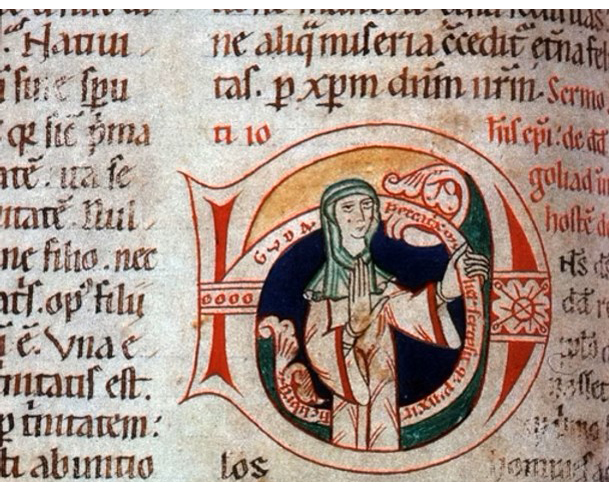
Word of Mouth: Embodied Stories of Premodern Women at Work
Word of Mouth is a multidisciplinary research project dedicated to uncovering the hidden stories of medieval religious women by working at the intersection of history and archaeological science...
AviArch – Avifauna in archaeoecological networks
AviArch is an ERC-Consolidator Grant funded research project that investigates the long-term interaction between humans, birds and the environment. AviArch deploys the most advanced methodologies and innovative theories in archaeology, biology and ecology in order to reconstruct the relationships between humans and birds witin dynamic and complex environments.

MALTHUS. Rise and fall cycles of Bronze age populations in Northern Italy
During the Late Copper and Bronze Ages, the areas of the central Po valley were characterised by unprecedented growth, due to the introduction of efficient agricultural technologies and the consequent increase in food production, giving rise to the Terramare Culture

HEADS: Health, Embalming and Dating: Investigating Life and Death in Ancient Egypt
In ancient Egypt, death was the beginning of a new life, and the body was the anchor for the soul. Complex mummification practices and burial rituals were needed to ensure a successful transition to the afterlife...

AviCulture: The role of birds in sustainable urban subsistence at Teotihuacan Mexico
Lessons from Mesoamerican cities are well-suited to address many problems with feeding urban populations today...
The MAET ZEMĺS: a new virtual life.
The project aims to produce a complete advanced 3D digital model of two artifacts (zemis) stored in the Museum of Anthropology and Ethnography of the University of Turin.

From text to teeth
We wish to reconstruct the daily lives and activities of a closed community of monastic women, who lived in the Cistercian monastery of S. Maria della Stella in Saluzzo.

The evolution of dietary diversity and the transition to agriculture in Europe
The Neolithic way of life emerged in the Near East, and diffused into Europe around 7000 BC, reaching its northwest limits soon after 4000 BC.

Two millennia of African farmscapes, food production and consumption in Northeastern South Africa (South African Farmscapes & Food)
The aim of our project is to systematically apply archaeology and scientific methods to investigate the changing approach to farming, food processing, plant use and consumption in NE South Africa.

HERDS. Animal Husbandry and its Economic Role in the Development of Central Mediterranean Protohistoric Societies
HERDS investigate changes in husbandry practices on continental and insular Italy during the Bronze and Iron Ages by using archaeological and bioarchaeological techniques.

The history of chocolate making in Turin – Experimental Archaeology Network (EXARC)
The project exploits the potential of experimental archaeology in order to investigate the history of chocolate and establish a correct methodological approach to detect the presence of exotic food.

Birds as a key line of evidence for human vulnerability and resilience to environmental shifts in a pre-agricultural context (BIRKY)
During the late Pleistocene and early Holocene of southwest Asia our species shifted from hunting and gathering to farming.

Investigation of dairying in Mediterranean Iberian Prehistory (iDIP)
In iDIP, we investigate the nature of early dairying in eastern-southeastern Iberia and test specific hypotheses from the Two-Step Milk Revolution model.

Early settlers of the Piedmont Alps between Climate Change and Innovation (APICI)
The project focuses on the study and enhancement of traditional production methods of fermented foods (cheese, wine, beer) in the Western Alps.

OESTATIC: ostrich eggshell phylogeography and archaeological implications
Ostriches, weird-looking giant birds that cannot fly, have been people’s companion species for a large part of prehistory.